
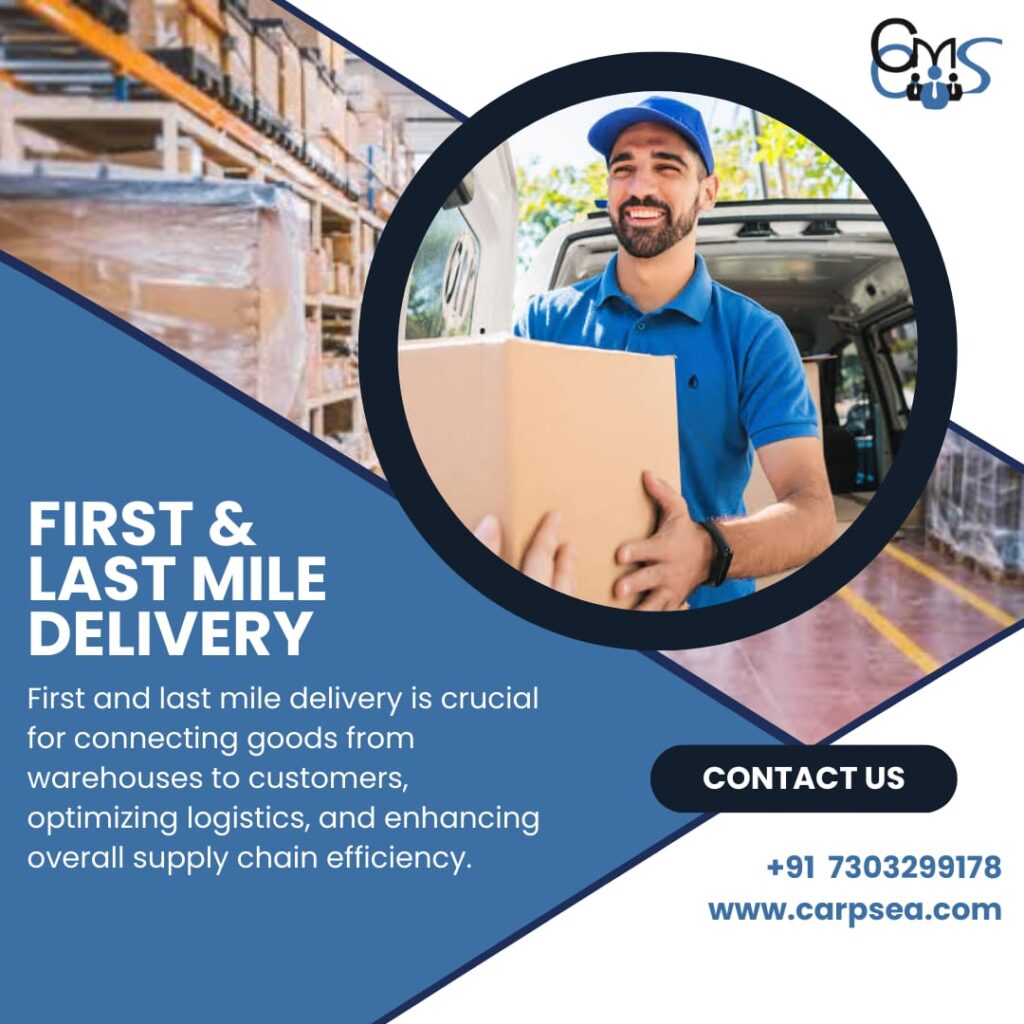
Why Is It Called Last Mile Delivery? Understanding Its Meaning and Importance
Imagine ordering a product online and tracking it as it travels hundreds of kilometres from a warehouse to your city. The package reaches a local delivery centre, and suddenly the tracking status says, “Out for delivery.” Within hours, your order arrives at your doorstep. This final journey is known as last mile delivery.
But why is it called last mile delivery when the distance can be much longer or shorter than one mile? The answer lies in logistics terminology, where the “last mile” describes the final stage of transportation between a distribution point and the customer.
Understanding this concept helps businesses improve delivery speed, customer satisfaction, and operational efficiency.
What Does Last Mile Delivery Mean?
Last mile delivery refers to the final step of the supply chain, in which goods move from a local warehouse, distribution centre, or delivery hub to their intended destination.
The destination could be a residential address, retail store, office, or another designated location.
For example, when a customer orders shoes online, the package may travel from a manufacturer to a regional warehouse before reaching a local courier facility. The delivery partner then transports the package directly to the customer’s address. This final movement is called last mile delivery.
The process generally includes:
Receiving packages at a local distribution hub.
Sorting shipments according to delivery locations.
Assigning packages to delivery personnel.
Planning efficient delivery routes.
Transporting orders to customers.
Confirming successful delivery.
Companies such as Carpsea can help businesses understand the importance of efficient delivery operations when planning logistics and distribution activities.
Why Is It Called Last Mile Delivery?
The term originated from transportation and telecommunications, where the “last mile” describes the final connection between a larger network and its end user. In logistics, the expression represents the final connection between a distribution network and the customer.
Importantly, the last mile does not necessarily measure one physical mile. A delivery might cover 500 metres in a crowded neighbourhood or several kilometres in a suburban area.
The word “last” identifies the position of this stage within the overall delivery journey.
Consider a typical shipment journey:
Manufacturing: Products are produced and packaged.
Long-distance transportation: Goods travel to regional distribution centres.
Local distribution: Packages reach a nearby delivery hub.
Last mile delivery: A courier delivers the package to its final destination.
The last stage is especially important because it directly connects logistics operations with the customer experience.
Even when earlier transportation stages run smoothly, a delayed or unsuccessful final delivery can leave customers dissatisfied.
Why Is Last Mile Delivery Important in Logistics?
Last mile delivery plays a significant role in modern supply chains, particularly as online shopping, quick commerce, and home delivery services continue to develop.
1. Improves Customer Satisfaction
Customers expect their orders to arrive safely and within the promised timeframe. Accurate delivery estimates, real-time tracking, and timely communication help create a positive experience.
A reliable final delivery can encourage repeat purchases and strengthen customer loyalty.
2. Influences Delivery Costs
The final stage can be expensive because individual orders often need to reach different addresses. Traffic congestion, failed delivery attempts, fuel consumption, and inefficient routes can increase operating expenses.
Businesses can manage these costs through route optimisation, shipment consolidation, and better delivery planning.
3. Supports E-commerce Growth
Online retailers depend on reliable delivery services to fulfil customer expectations. Efficient last mile operations help businesses manage increasing order volumes without compromising service quality.
4. Builds Brand Reputation
Customers frequently judge an online retailer by the condition and timing of their deliveries. Damaged packages, repeated delays, and poor communication can harm brand perception.
For this reason, companies need dependable delivery partners and clear operational processes.
What Are the Main Challenges of Last Mile Delivery?
Although the final delivery stage appears straightforward, it involves several practical challenges.
Traffic and route planning: Congestion can delay shipments, particularly in busy urban areas.
High delivery costs: Multiple stops, fuel expenses, and labour requirements can increase the cost per order.
Failed delivery attempts: Incorrect addresses, unavailable customers, and access restrictions may require another visit.
Customer expectations: Many customers expect flexible delivery windows, live tracking, and quick resolution of problems.
Environmental concerns: Frequent vehicle journeys can increase fuel consumption and emissions.
Businesses can address these challenges by using route-planning software, maintaining accurate address information, communicating delivery updates, and analysing delivery performance.
For example, a retailer experiencing repeated delays in one neighbourhood could review traffic patterns and adjust delivery schedules accordingly.
How Can Businesses Improve Last Mile Delivery?
Businesses can improve final delivery performance through practical, measurable steps.
Optimise delivery routes: Use location data and traffic information to reduce unnecessary travel.
Improve inventory visibility: Ensure local hubs know which products are available and ready for dispatch.
Communicate clearly: Send customers accurate delivery notifications and estimated arrival times.
Measure performance: Track on-time delivery rates, failed attempts, delivery costs, and customer complaints.
Choose reliable logistics partners: Evaluate service coverage, operational capacity, tracking systems, and customer support.
Carpsea recognises the importance of organised logistics operations in helping businesses manage distribution requirements and work towards dependable delivery experiences.
FAQs-
1. Why is it called last mile delivery?
It is called last mile delivery because it represents the final stage of transporting goods from a distribution point to the end customer, regardless of the actual distance travelled.
2. Does last mile delivery always cover one mile?
No. The term is a logistics expression, not a fixed distance measurement. The journey may cover a few hundred metres or several kilometres.
3. What is an example of last mile delivery?
When a courier collects an online order from a local delivery hub and takes it to a customer’s home, that journey is an example of last mile delivery.
4. Why is last mile delivery expensive?
It can be expensive because deliveries involve individual destinations, labour costs, fuel consumption, traffic delays, and occasional unsuccessful delivery attempts.
5. How can businesses improve last mile delivery?
Businesses can improve it through route optimisation, accurate addresses, real-time tracking, effective customer communication, and reliable logistics partnerships.
Looking to improve your logistics operations? Connect with Carpsea to explore practical approaches to distribution, workforce coordination, and efficient delivery management for your business.